
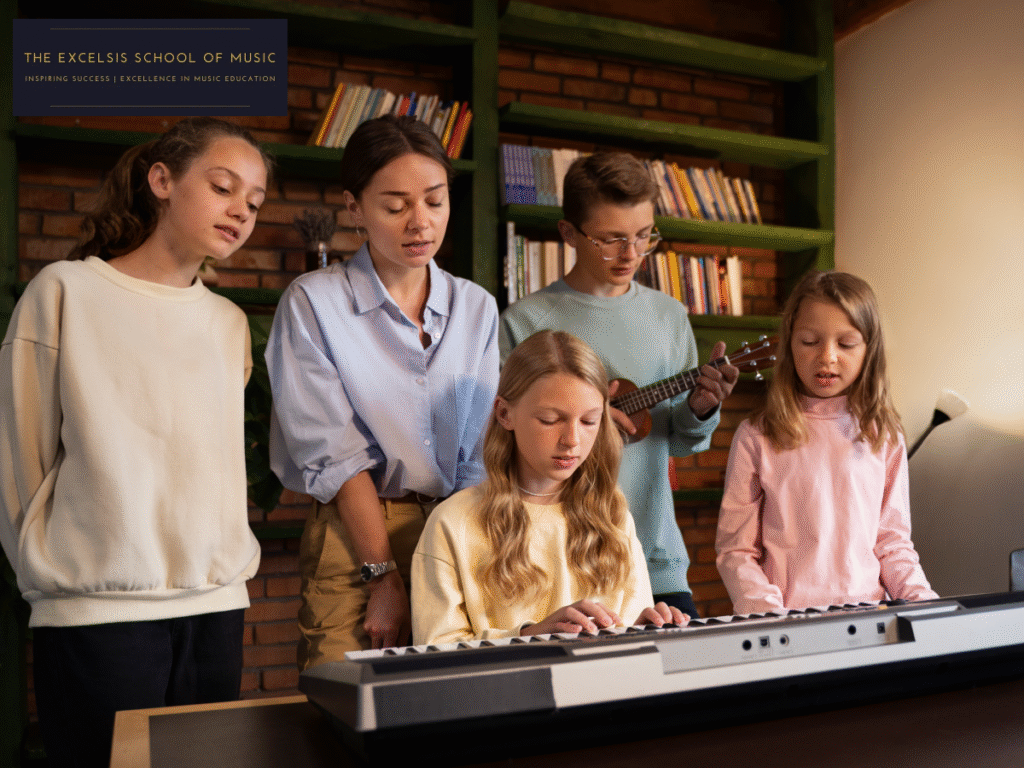
Learning music at a young age shapes how children think, listen, and express themselves. Piano lessons are especially powerful because they build coordination, focus, and creativity at the same time. When children learn piano in a group setting, these benefits multiply through shared experiences and social interaction.
At music schools like The Excelsis School of Music, group piano lessons are designed to support musical growth while also developing confidence, communication, and teamwork skills that children carry into everyday life.
1. Builds Strong Social Skills Early
Learning With Peers Encourages Interaction
Group piano lessons give children regular opportunities to interact with others their age. Playing music together helps children learn how to listen, take turns, and respond appropriately in a shared setting.
This interaction supports emotional development and helps shy children feel more comfortable around others.
Social skills developed include
- Listening to others
- Taking turns
- Respecting group rules
2. Boosts Motivation Through Shared Learning
Children Feel Encouraged by Group Energy
Learning alongside peers motivates children to practise and stay engaged. When children see others learning the same pieces, they feel encouraged rather than pressured.
This shared progress keeps lessons enjoyable and reduces fear of making mistakes.
Motivational benefits
- Increased enthusiasm
- Positive peer influence
- Reduced performance anxiety
3. Improves Listening and Concentration
Group Playing Strengthens Focus
Group piano lessons require children to listen carefully to instructions, rhythms, and other players. This strengthens active listening skills and improves attention span.
Better focus during music lessons often carries over into schoolwork and daily routines.
Key improvements
- Better auditory awareness
- Improved concentration
- Stronger classroom focus
4. Develops Teamwork and Cooperation
Music Teaches Children to Work Together
Playing music in a group helps children understand cooperation. They learn that each person’s role matters and that timing and balance are essential.
These lessons build respect for others and encourage collaborative thinking.
Teamwork skills gained
- Cooperation
- Patience
- Shared responsibility
5. Builds Confidence in a Supportive Setting
Group Learning Reduces Pressure
Group piano lessons offer a gentle environment where children feel supported rather than singled out. Children gain confidence by playing in front of peers who are learning at the same level.
This positive exposure builds self-belief over time.
Confidence outcomes
- Willingness to perform
- Comfort with feedback
- Improved self-esteem
6. Encourages Healthy Competition
Progress Feels Fun and Positive
Group lessons introduce friendly competition that pushes children to improve without stress. Seeing peers practise and succeed encourages children to try harder.
This type of motivation feels natural and enjoyable.
Healthy competition benefits
- Increased effort
- Goal setting
- Positive attitude towards learning
7. Supports Faster Musical Progress
Children Learn From Each Other
Children in group piano lessons learn not only from the teacher but also from watching classmates. Observing others helps reinforce techniques and musical concepts.
This shared learning speeds up understanding and retention.
Learning advantages
- Visual learning
- Reinforced techniques
- Better memory recall
8. Makes Learning Piano More Enjoyable
Lessons Feel Like a Shared Activity
Group lessons feel more like a fun activity than a formal class. Children laugh, play, and enjoy music together, which keeps them interested for longer.
Enjoyment is key to long-term learning success.
Enjoyment factors
- Positive atmosphere
- Musical games
- Shared achievements
9. Develops Rhythm and Timing Skills
Playing Together Improves Musical Accuracy
Group piano lessons require children to stay in time with others. This strengthens rhythm awareness and timing accuracy, which are essential musical skills.
Strong rhythm skills improve overall musical ability.
Musical skills enhanced
- Timing control
- Rhythm accuracy
- Ensemble awareness
10. Creates a Strong Foundation for Advanced Learning
Group Lessons Prepare Children for Future Growth
Group piano lessons provide a strong foundation for advanced musical training. Children develop discipline, listening skills, and confidence that support future solo lessons or ensemble playing.
This foundation helps children progress smoothly as their skills grow.
Long-term benefits
- Readiness for advanced lessons
- Strong musical habits
- Lifelong appreciation of music
Why Parents Choose Group Piano Lessons at Excelsis
Parents trust The Excelsis School of Music because lessons focus on both musical skill and child development. Group piano lessons are structured, engaging, and age-appropriate, ensuring children learn in a safe and encouraging environment.
You can explore more about their teaching approach and programmes by visiting the Excelsis School of Music website.