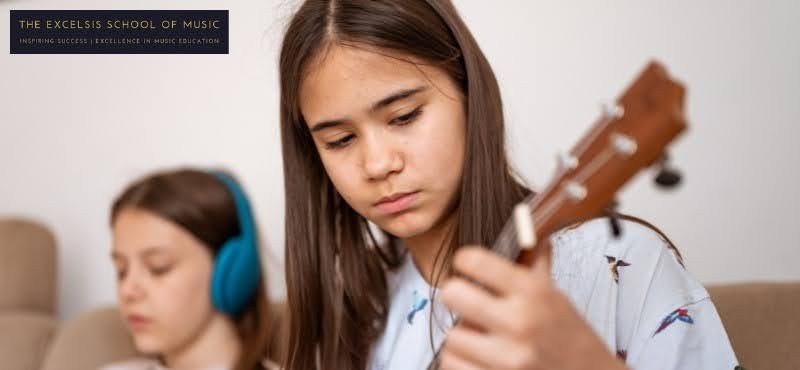
Music education during early life is crucial in developing the child in general. It promotes brain development, enhances communication and develops social and emotional abilities at an early age. Children who are exposed to music at an early age have more learning capabilities and understand the world surrounding them better.
Supports Brain Development
Strengthens Neural Connections
Music stimulates more than one part of the brain. This assists in forming good neural connections that enhance memory and thinking abilities. Exposure at an early age enables the brain to work better with patterns, sounds, and sequences.
Improves Cognitive Skills
Learning music enhances problem-solving and logical thinking. Children who have used music education tend to be more attentive with the ability to process information quickly. These abilities contribute towards academic success in fields such as maths and reading.
Enhances Linguistics and Communication
Enhances Speech Development
New sounds and words are introduced in songs and rhymes in a natural manner. This assists children to grow up with good speech and pronunciation. Language patterns are reinforced by repetition in music.
Builds Listening Skills
Music helps children to be attentive to tones, rhythm and instructions. This enhances their comprehension and response power in conversations. Listening skills are critical in communication and learning.
Promotes Social and Emotional Development
Builds Confidence
Engaging in music activities enables children to express themselves. This instils confidence and makes them share ideas without fear.
Supports Emotional Expression
Music is a safe means through which children express feelings. It helps them understand emotions and respond to different situations in a balanced manner.
Develops Motor Skills
Improves Coordination
Music activities can be used to develop coordination through clapping, tapping, and movement. These exercises enhance fine and gross motor skills.
Enhances Physical Control
Movement based on music enhances balance and body awareness. This supports physical growth and overall health.
Enhances Creativity and Imagination
Encourages Creative Thinking
Children are able to experiment with sounds and create their own patterns through music. This builds imagination and independent thinking.
Builds Artistic Awareness
Exposure to different musical genres enables children to value creativity. It promotes interest in arts and self-expression.
Develops Discipline and Routine
Encourages Consistency
Music lessons give children an understanding of routine. This helps them become organised and follow structured activities.
Improves Focus
Learning music requires attention and regular practice. This improves focus and helps children stay engaged in tasks.
Supports Academic Growth
Enhances Learning Ability
Children involved in music education often perform better in school. Music improves memory, attention and problem-solving skills.
Improves Reading and Maths Skills
Learning rhythm and patterns supports reading and mathematical thinking. These skills help children achieve better academic results.
Strengthens Parent-Child Connection
Encourages Shared Activities
Parents are often involved in music activities, which creates bonding opportunities. This strengthens emotional connection and trust.
Enhances Home-based Communication
Playing and singing together improves communication between parent and child. This creates a supportive learning environment at home.
Promotes Long-Term Development
Builds Lifelong Skills
Early music education develops lifelong skills such as discipline, creativity and communication.
Produces a Love of Learning
Music makes learning enjoyable and engaging. This encourages children to explore new skills with confidence.
Final Thoughts
Early music education is important for child development as it supports cognitive, emotional, and physical growth. It builds essential skills that help children succeed in school and daily life. Starting music education early provides a strong foundation for lifelong learning and personal development.