
Is it too late to learn an instrument as an adult? No. Adults pick up an instrument every term, and most of them get further, faster, than they expect – because they practise on purpose rather than because a parent told them to.
The question usually comes from somewhere specific: a piano in the hallway nobody plays, a violin lesson given up at eleven, a long-standing wish to finally read music properly. Adults tend to assume there’s a window that closes somewhere in childhood. There isn’t. What changes is how you learn, not whether you can.
Why the “Too Late” Idea Sticks Around
Part of it is comparison. Search for videos of children playing complex pieces and it’s easy to conclude that fast progress only belongs to the young. But those clips are the exception being held up as the rule. Most children learning an instrument progress slowly too – you just don’t see their first six wobbly months online.
Adults also carry more self-consciousness into a first lesson. Nobody enjoys being visibly bad at something in front of other people, and a first attempt at an instrument is, by definition, bad at first. That discomfort gets mistaken for evidence that it’s too late, when really it’s just what starting anything new feels like at any age.
What Actually Changes With Age
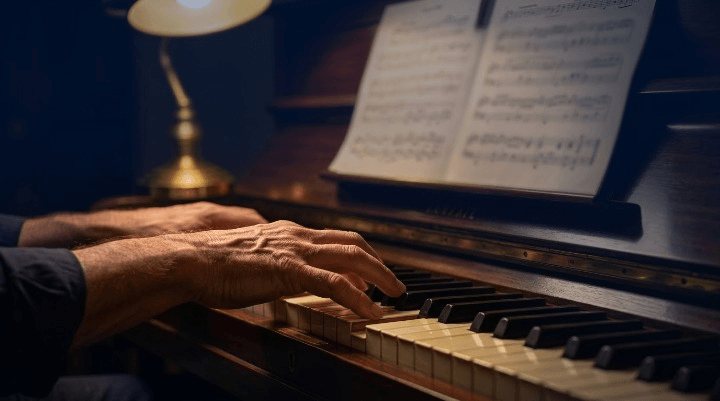
Adult learners typically have less spare time and a stiffer response to hours of repetition than a ten-year-old does. Fine motor skills, particularly independent finger movement on piano, do take a little longer to bed in. None of that stops progress; it just changes the shape of it.
What adults have in their favour is usually enough to offset it. They understand why practice matters, they can follow written explanations rather than needing everything demonstrated, and they choose to be there. A class of adult beginners tends to move at a steadier, more consistent pace than a class of children precisely because nobody in the room is being made to attend.
| Factor | Learning as a Child | Learning as an Adult |
|---|---|---|
| Motivation | Often set by a parent | Self-chosen, usually more consistent |
| Physical adaptation | Faster finger independence | Slower but steady with regular practice |
| Understanding theory | Needs simplified explanation | Grasps written concepts more quickly |
| Time available | Structured by school and parents | Has to be carved out deliberately |
| Self-consciousness | Generally low | Higher at first, fades with a few sessions |
What Realistic Progress Looks Like
Most adult beginners who practise two or three times a week can play simple pieces with both hands within a few months and hold a basic conversation about rhythm and key signatures not long after that. It isn’t instant, and it isn’t meant to be. The people who stick with it tend to be the ones who judge themselves against last month, not against a professional pianist.
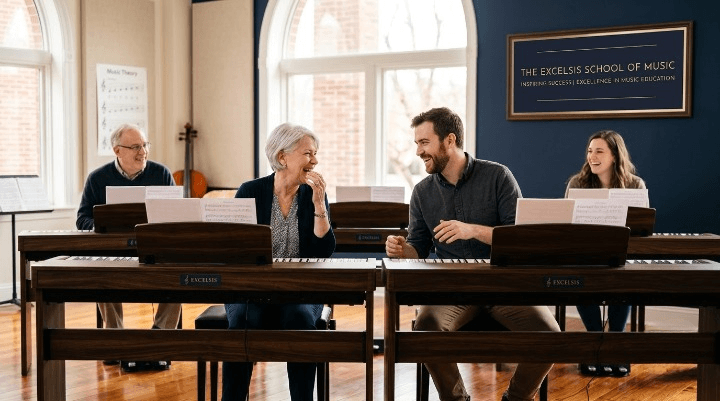
A group setting also helps more than people expect. Sitting alongside other adults who are equally new removes the pressure of being the only beginner in the room, and it’s one of the reasons group piano lessons work so well for adults who are starting from nothing.
Where to Start
If you’re weighing this up, the honest answer is that the only real barrier is beginning. Our piano classes for adults are built around exactly this starting point, and if you want a longer look at why age stops mattering the moment you sit down at the keys, our piece on why piano lessons for adults are a game changer goes into more detail on the practical side, from lesson pacing to how quickly you can expect to read music.
Every one of our teachers is highly qualified and DBS-checked, and our programmes are built around the person in front of them rather than a fixed script, which matters more for adult learners than almost anything else on this list.
It’s Not Too Late to Learn an Instrument as an Adult
Every new term brings a fresh group of adult beginners starting from exactly where you are now. Come and see what a first lesson actually feels like.
Book Your First Lesson