Do you need to be musical to learn an instrument? No – “musical” isn’t something you either have or don’t. Pitch recognition, rhythm and a feel for music are skills built through listening and repetition, and almost everyone who thinks they lack them simply hasn’t practised those skills yet.
This is one of the most common reasons adults never sign up for lessons and parents assume music isn’t “for” their child. It’s also one of the easiest myths to dismantle, because it doesn’t hold up against how teaching actually works in a classroom.
Where the Myth Comes From
Part of the problem is language. People say someone is “naturally musical” the same way they might say someone is naturally tall, as if it’s fixed at birth. In reality, what looks like natural talent is almost always early exposure: a household where music played constantly, a parent who sang, years of casual listening before formal lessons ever started. A five-year-old who seems to have “an ear” usually just had a two-year head start nobody noticed.
The other culprit is being told, often once, often by a well-meaning teacher decades ago, that you “can’t sing” or “have no rhythm.” That single comment tends to calcify into a lifelong belief, repeated as fact, that was never actually tested again.
What “Being Musical” Actually Is
Pitch matching, keeping time, and recognising patterns in melody are learnable skills, the same as reading or riding a bike. Some people pick them up faster than others, exactly as some people pick up a foreign language faster than others, but speed isn’t the same as capability. Given consistent, structured practice, the overwhelming majority of people can learn to sing in tune, keep a steady beat, and play an instrument to a genuinely enjoyable standard.
Genuine amusia, an inability to perceive pitch or rhythm at all, is real but rare, affecting a small percentage of the population. Almost everyone who says “I’m not musical” doesn’t have amusia. They have an untrained ear and, usually, an old comment they never questioned.
| The Myth | What’s Actually True |
|---|---|
| “Some people are born musical, others aren’t” | Musical skills are built through listening and repetition, not fixed at birth |
| “I have no rhythm” | Timing improves quickly with regular, guided practice |
| “I can’t sing in tune” | Most people improve significantly within a few weeks of pitch training |
| “My child isn’t musical” | Early exposure and enjoyment matter far more than innate ability |
| “It’s too hard to start now” | Structured group classes are designed for complete beginners at any age |
What This Means for Getting Started
The practical takeaway is that hesitating because you don’t feel “musical enough” is solving the wrong problem. What actually predicts whether someone learns an instrument successfully is consistent practice and a class paced to where they genuinely are, not some innate quality they either have or lack.
Our group classes are grouped by starting point rather than assumed ability, which means nobody is placed next to someone who’s been playing for years, and why our piece on why group piano lessons are great for beginners spends so much time on exactly this fear. Teachers are trained to build pitch and rhythm from wherever a student is starting, not to assume it should already be there.
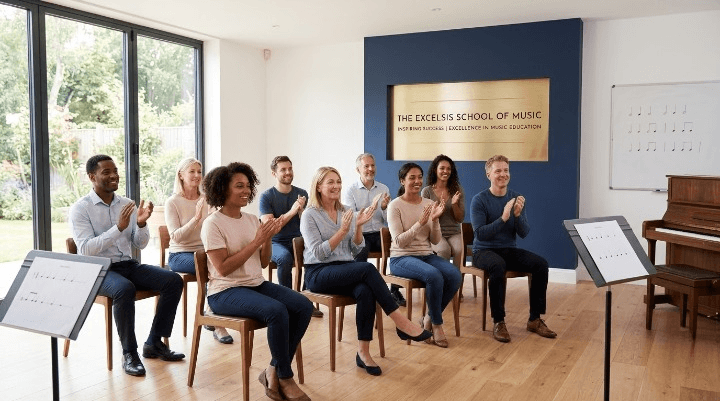
If a comment from years ago is the only thing standing between you and lessons, it’s worth testing it against an actual class rather than treating it as settled. Most people who do are surprised by how quickly it stops feeling true.
You Don’t Need to Be Musical to Learn an Instrument
Every beginner class starts from the same place: no assumptions, no pressure, just a steady introduction to reading, playing and listening.
Try a Beginner Class