
How do I choose a music school for my child? Look past the prospectus and check four things directly: how classes are grouped, who’s actually teaching, what a trial lesson looks like, and how progress gets communicated back to you as a parent.
Most music schools look similar on a website: smiling children, a list of instruments, some mention of qualified teachers. The differences that actually affect your child’s experience only show up once you start asking specific questions, so it helps to know which ones matter before you book anything.
Start With How Classes Are Grouped
Ask whether children are grouped by age or by actual starting point. A class grouped purely by age can leave a genuine beginner sitting next to a child who’s had two years of lessons already, which is discouraging for one and boring for the other. Schools that assess ability before placing a child, rather than defaulting to age brackets, tend to produce far more consistent progress across a term.
It’s also worth asking how the pace of a class adjusts if a student is struggling or racing ahead. A good answer describes a specific process, not a vague reassurance.
Check Who Is Actually Teaching
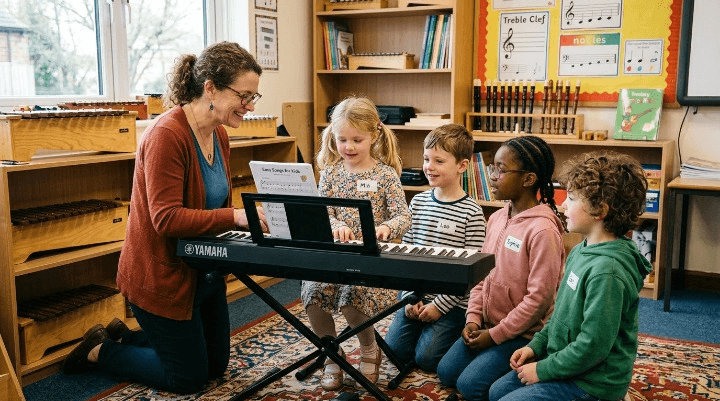
Qualifications and safeguarding checks aren’t a formality, they’re the baseline. Ask directly whether teachers are DBS-checked and what training or performance background they hold. A school that answers this clearly and immediately, without hesitation, is usually one that takes it seriously as policy rather than treating it as a box-ticking exercise.
Beyond qualifications, ask how long teachers typically stay. Consistency of teacher across a school year matters enormously for younger children, who often build confidence around a specific relationship rather than a curriculum alone.
| What to Check | Why It Matters |
|---|---|
| How classes are grouped | Prevents mismatched pacing between beginners and experienced students |
| Teacher qualifications and DBS checks | Confirms safeguarding and teaching standards are genuine, not assumed |
| What a trial lesson involves | Shows you the real teaching style before you commit |
| How progress is communicated | Keeps you informed without having to chase updates |
| Performance opportunities | Builds confidence and gives practice a purpose beyond the lesson |
Ask About a Trial and How Progress Is Shared
A school confident in its teaching will usually offer a trial class rather than asking you to commit on the strength of a website alone. Use it to watch how the teacher handles a child who’s struggling with something, not just how the strongest student in the room performs.
Ask how you’ll know your child is progressing. Some schools rely entirely on the annual concert as the only visible marker; others give parents regular, specific feedback about where a child is up to and what to reinforce at home. The second approach tends to keep parents genuinely involved rather than guessing.
What This Looks Like in Practice
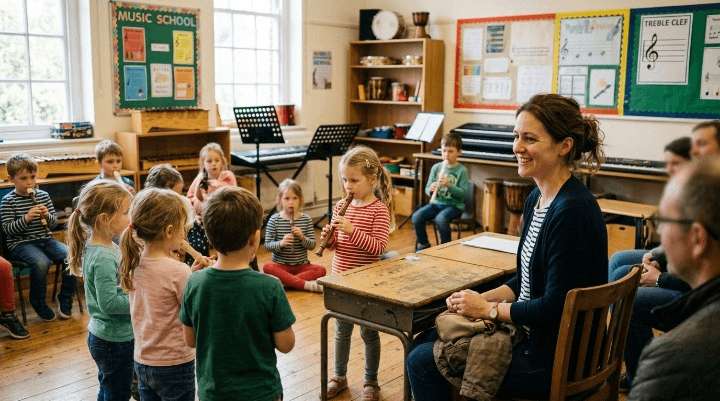
At our London music school, every teacher is highly qualified and DBS-checked, classes are grouped by starting point rather than age alone, and parents are kept involved in exactly how their child is progressing, not just told the term is going well. Our programmes page sets out age groups and starting points clearly, and our testimonials page is a reasonable place to see how that plays out for other families.
Whichever school you’re weighing up, the questions above will tell you more in ten minutes than an entire prospectus will.
Choosing a Music School for Your Child? Come and See Us First
Book a trial class and see exactly how our teachers group, pace and support beginners from the very first lesson.
Book a Trial Class