
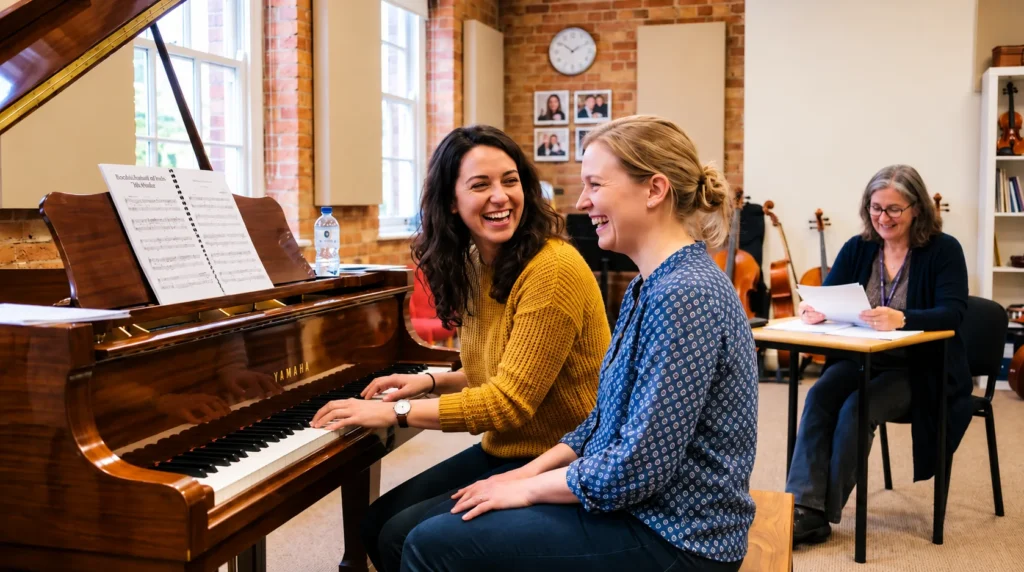
Learn Piano With a Friend: Why Group Lessons Work So Well in Pairs
Learning an instrument alone is hard to stick with. Most people who buy a keyboard "for fun" and plan to teach themselves off YouTube quietly stop within a couple of months — not because piano is too difficult, but because there's nothing keeping them accountable when week three gets busy.
This is one of the quiet advantages of piano lessons with friends: you're not just learning a skill, you're building a shared habit with someone else who's relying on you to show up too.
Why Learning Together Actually Sticks
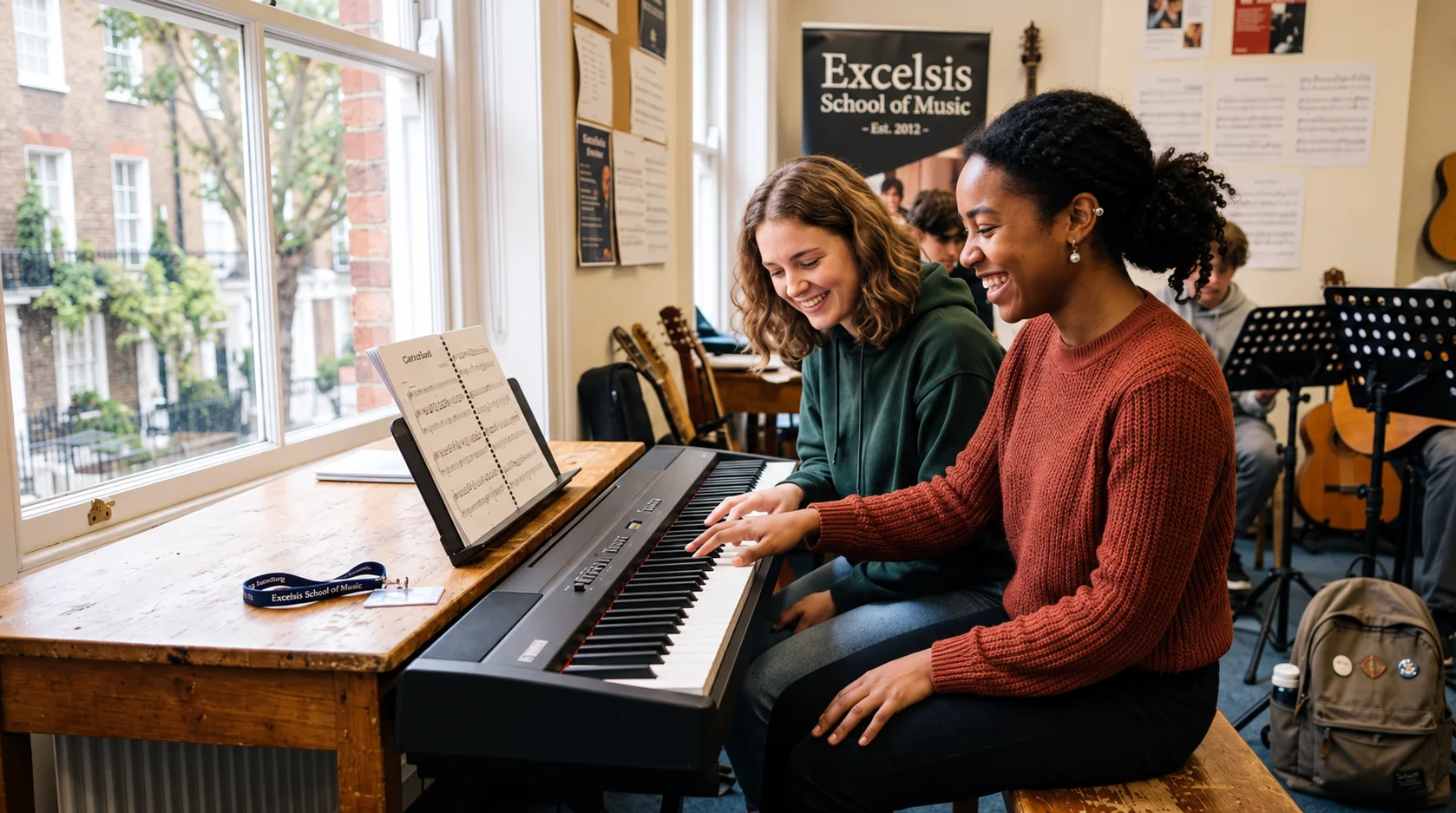
There's a reasonably well-documented pattern in how people stick with new skills — you're far more likely to keep going if someone else is doing it alongside you. Gyms know this, which is why "gym buddy" is such a common phrase. The same logic applies to learning piano.
When you and a friend sign up for group piano lessons together, you've effectively built in a second layer of motivation on top of whatever made you want to learn in the first place. If you're tempted to skip a session, you've now got a friend who's expecting to see you there. That's a much stronger pull than a vague personal goal to "practise more."
It also makes the awkward early stage less awkward. Everyone sounds rough for the first few weeks of learning piano — hands don't cooperate, rhythm falls apart, simple pieces feel harder than they should. Going through that stage next to a friend rather than alone in front of a teacher tends to take the sting out of it.
An Alternative to the Usual Date Night or Catch-Up
London has no shortage of restaurants, bars and the usual rotation of catch-up spots, and there's nothing wrong with any of them. But if you and a partner, or you and a close friend, are looking for something a bit different to do together on a weeknight, group piano lessons are a genuinely good alternative.
It's an hour where you're both doing something new, both slightly out of your comfort zone, and both walking away having actually learned something — rather than just having had another conversation over coffee. A fair number of our couples and friend pairs originally signed up as a one-off "let's try something different" idea and ended up sticking with it for terms on end.
How We Handle Mixed-Ability Friend Pairs
A common hesitation we hear is: "What if one of us is better than the other?" It's a fair question, and it comes up a lot, especially with couples where one person played as a child and the other has never touched a piano.
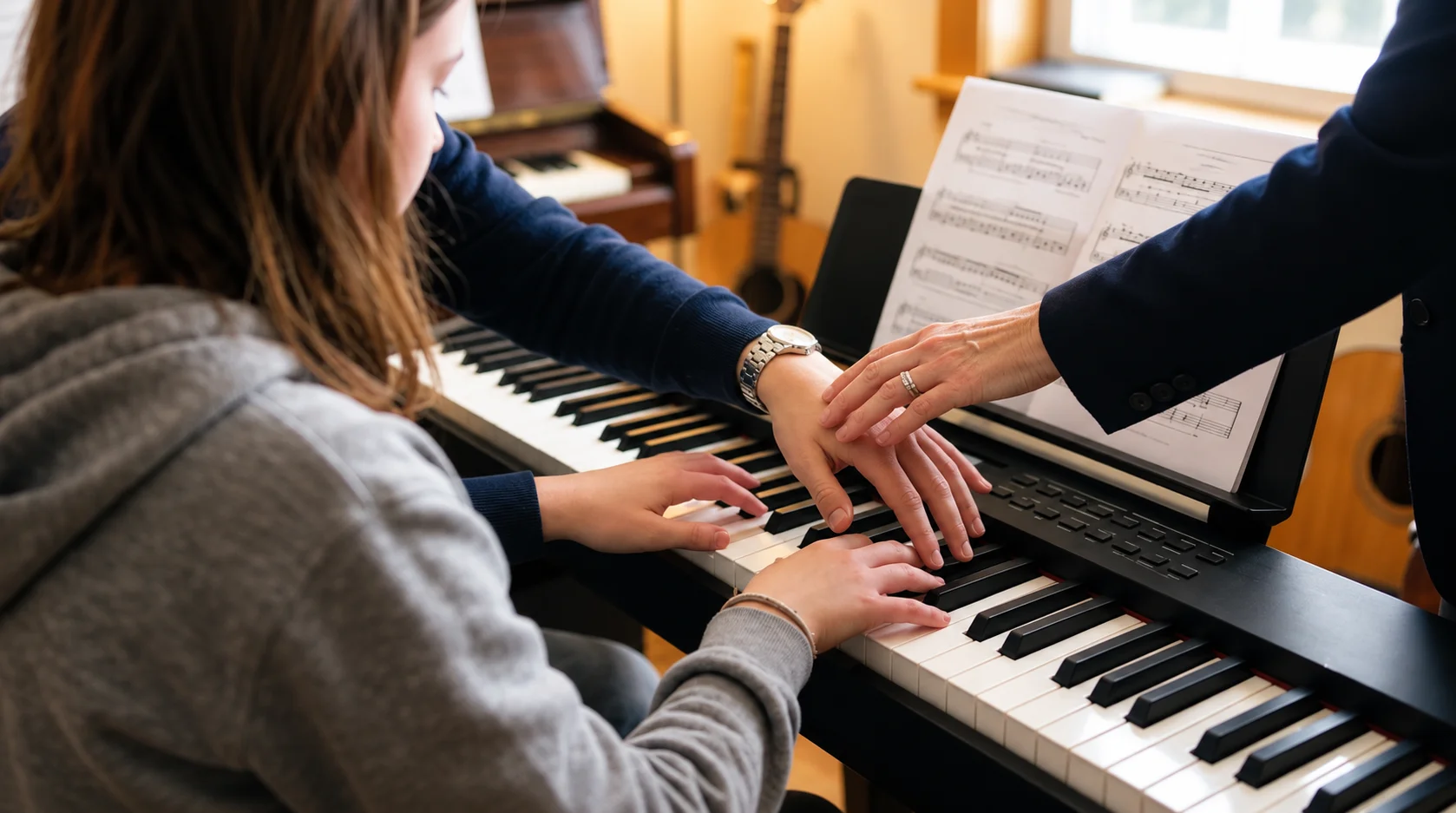
In practice, this rarely causes a problem. Within a group class, the teacher works with each student individually during the guided practice portion of the lesson, so a slightly more advanced partner isn't held back and a complete beginner isn't left behind. If the gap in ability is more significant — say, one of you played to grade 5 as a teenager and the other has genuinely never played — we'll usually recommend the more experienced partner joins a class suited to their level, with the beginner starting in a foundational group, so neither of you spends the lesson either bored or overwhelmed.
The short version: bring your friend, and we'll figure out the right setup once we know where you're both starting from.
What to Expect When Booking as a Pair
Booking as a pair is straightforward. Let us know you're signing up together, tell us roughly your prior experience (or lack of it), and we'll either place you both into the same existing cohort or, if you'd prefer, set you up in a slightly more private small-group session with just the two of you and the teacher.
| Join an Existing Cohort | Private Pair Session | |
|---|---|---|
| Who else is in the room | 2–4 other students | Just the two of you |
| Cost per person | Lower | Slightly higher |
| Atmosphere | Sociable, group energy | More focused, quieter |
| Best for | Meeting new people alongside a friend | Couples who prefer privacy |
| Scheduling | Fixed weekly slot | More flexible, can often be arranged around you |
Most pairs choose to join an existing cohort — it tends to be more sociable and often works out slightly cheaper per person — but a dedicated two-person session is available if you'd rather keep it just between the two of you.
What Our Students Say
We hear a fairly consistent story from friend pairs and couples who've been through this: one person suggests it half-jokingly, the other agrees mostly to humour them, and a few weeks in, it's become the fixed weekly plan neither of them wants to cancel on. It's not that piano itself is the draw at first — it's having a reason to see each other properly, away from screens, doing something neither of you is instantly good at.
That last part matters more than people expect. There's something disarming about being equally bad at something with someone you know well. It tends to strip away the usual social pressure to seem competent, which — oddly — is what makes it fun.
Learning as a Small Group of Friends
Pairs aren't the only option. If you've got three or four friends who all fancy learning together, we can usually accommodate a small friend group as its own cohort, rather than splitting you across different classes. The dynamic is similar to a pair booking, just with a bit more energy in the room — and slightly more good-natured heckling when someone fluffs a scale.
Bring a Friend to a Free Taster Session
If you've been meaning to try piano but haven't got round to it, or you've been threatening to learn "one day" with a friend or partner for years, this is about as low-pressure a starting point as it gets. Come along to a free taster session together, sit at the keys, and see how it feels before committing to anything.
Book a Free Taster SessionIt's the same format covered in our full group piano lessons programme, just with no obligation attached — bring a friend, book a taster, and find out for yourselves whether it's for you.