
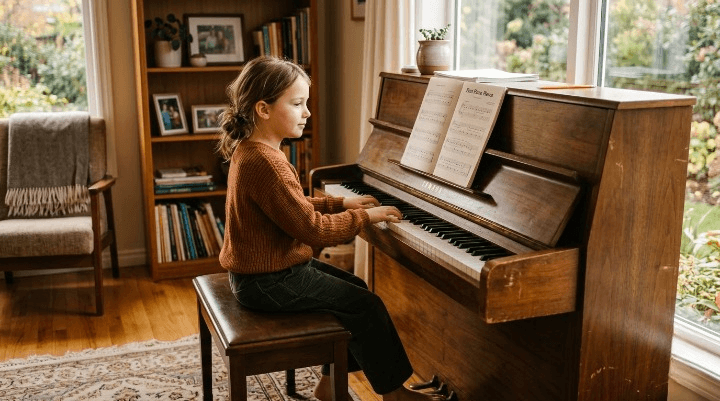
The best way to keep a child motivated to practise is to make sessions short, specific and achievable, rather than relying on nagging or long, unfocused sittings at the piano that end in frustration for everyone involved.
Almost every parent hits the same wall eventually: a child who was excited to start lessons suddenly needs constant reminding to practise. It’s rarely a sign they’ve lost interest in music itself. More often, practice has quietly turned into a chore with no clear point, and the fix usually has more to do with structure than willpower.
Why Motivation Drops Off
The novelty of a new instrument wears off after the first few weeks, and that’s completely normal. What replaces it, ideally, is a sense of visible progress, being able to play something today that felt impossible last month. When practice sessions are too long, too vague, or repeat the same struggling passage without a clear goal, that sense of progress disappears, and motivation goes with it.
Pressure from a parent standing over a child during practice tends to make things worse, not better. It turns practice into a performance for someone else’s approval rather than something the child is doing for themselves, which is exactly the wrong association to build early on.
What Actually Works
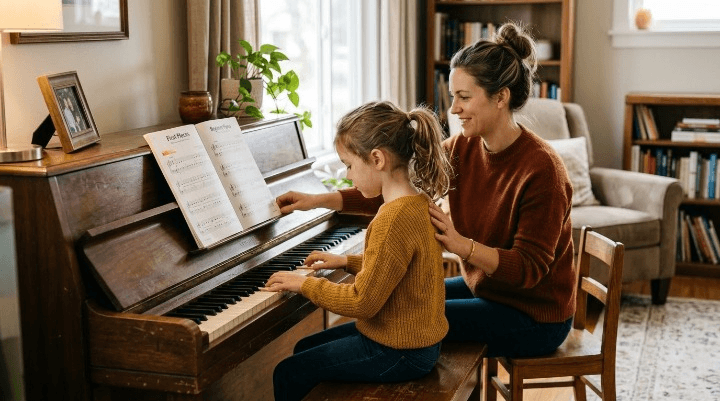
Short, specific sessions beat long, open-ended ones almost every time. Ten to fifteen minutes with one clear goal, get this line smooth, fix this one rhythm, is far more productive than thirty unfocused minutes, and it’s far easier for a child to agree to without a fight.
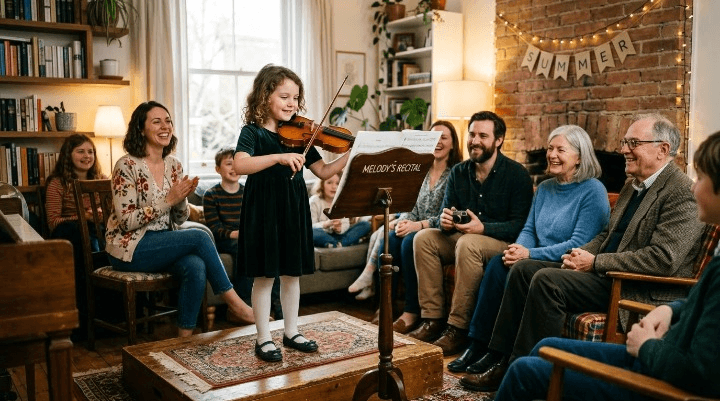
Giving a child something to work towards helps too. A small performance opportunity, playing for a grandparent, joining a school assembly, taking part in an end-of-term concert, gives practice an actual purpose beyond “because you have to.” It’s one of the reasons our own performance opportunities exist throughout the year rather than just once, so there’s regularly something concrete for a student to prepare for.
| What Works | What Tends to Backfire |
|---|---|
| Short, specific practice goals | Long, open-ended sessions with no clear focus |
| Praise for effort and small improvements | Comparing progress to other children |
| Regular performance opportunities | Practice with no purpose beyond the next lesson |
| Letting the child choose part of what they play | Only ever practising assigned pieces |
| A consistent, low-key routine | Standing over a child correcting every note |
Letting Them Choose Something
Children practise more willingly when at least part of what they’re playing feels like their own choice, rather than everything being assigned. Even something as simple as letting a child pick which of two pieces to work on first, or spending five minutes playing a tune they already know for fun, builds a sense of ownership over the instrument that pure assignment never does.
Consistency matters more than intensity. A child who practises for ten minutes most days will progress further than one who practises for an hour once a week under protest, and a shorter daily habit is also far easier to sustain without turning into a battle.
How We Support This
Our teachers set specific, achievable goals between lessons rather than vague homework, and our regular events give students a steady stream of reasons to practise beyond the weekly lesson itself. Several parents mention exactly this shift in our testimonials, describing children who started asking to practise rather than needing to be told.
Need Help Keeping a Child Motivated to Practise?
Talk to one of our teachers about setting achievable goals and finding the next performance opportunity to work towards.
Speak to a Teacher